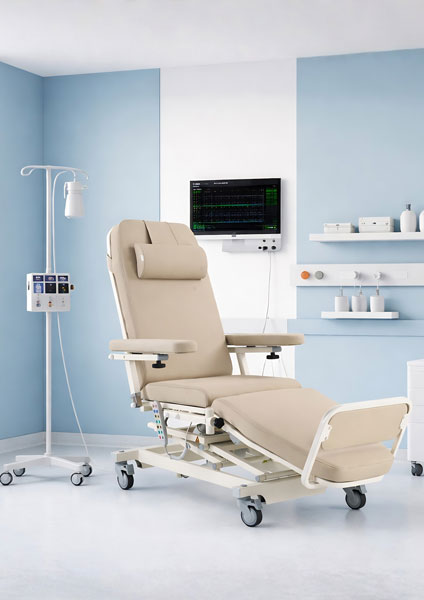
Long infusions and dermatology treatments can leave patients seated in one position, raising pressure injury risk. Clinics should ask vendors how chair cushioning, upholstery and recline action manage pressure, shear and moisture, and how staff can reposition patients safely.
By the end of this article, you can translate broad concerns about patient comfort into specific questions about chair cushioning, upholstery and repositioning. Those details deserve attention: prolonged sitting can affect the skin and underlying tissue well before a chair appears unsuitable on a specification sheet.
When comparing a chair for chemotherapy, you may focus more on armrest movement and recline range than on the seat surface. Long infusions and dermatology treatments can make it hard for patients to shift position, so seating must allow treatment access while supporting pressure care.
Why Sitting Still Matters
A pressure injury occurs when sustained pressure damages the skin and underlying tissue. During seated procedures, body weight may stay focused on the buttocks and ischium, the lower pelvic bones that bear much of the load in a chair. Shear occurs when skin remains against a surface as deeper tissue shifts, as when a patient slides down a reclined backrest. Moisture can soften skin. Microclimate refers to heat and humidity at the skin surface, making upholstery behaviour relevant along with cushioning.
Limited Mobility Matters
Limited mobility means having less ability to change position without assistance or discomfort. During a lengthy infusion or procedure, a patient may be awake and seated yet unable to shift safely, because treatment access, positioning needs or equipment can restrict movement.
The NICE clinical guideline on pressure ulcer prevention identifies people with significantly limited mobility as being at elevated risk. The same reasoning applies to seated procedures if a patient cannot freely change position for an extended period.
Skin and Seating Checks
Skin checks should target areas where the chair bears weight or treatment devices press against the body. During seated procedures, staff should closely inspect the buttocks, ischium and skin beneath tubing or other equipment when assessing skin condition.
The pressure injury prevention guidance from NPIAP recommends checking pressure points and using a pressure-redistributing cushion for people seated in chairs. Such a cushion spreads body weight over a broader contact area instead of letting one small spot bear most of the force.
- Ask which areas of the cushion redistribute pressure.
- Ask how the upholstery manages heat and moisture against the skin.
- Check whether reclining can reduce sliding against the backrest.
- Check whether staff can reposition a patient without disturbing access lines.
Chair Specification Questions
A chair specification should explain how the seating surface controls pressure, shear, and moisture, not simply name foam thickness or upholstery colour. The same criteria matter for a chair for chemotherapy, where lengthy sessions may leave patients with few chances to reposition themselves.
For longer treatments, a derma chair should allow staff to change a patient’s position without dragging the back or buttocks across the cushion. When comparing a derma chair, ask the vendor how its cushion and geometry address immobility, shear exposure, moisture, perfusion, body size, and weight.
In Closing
Procedure seating is part of pressure injury prevention when patients remain in one position for extended care. A chair can support treatment delivery and still create avoidable tissue loading if its cushion, recline action or upholstery makes repositioning difficult.
Procurement teams should ask vendors to describe the pressure-redistributing surface, likely pressure points and how staff can reposition a patient without pulling on skin or treatment lines. Could your team ask those questions before approving the purchase?